Root health
Phalaenopsis Orchid Root Rot Signs and Next Steps
Reviewed against cited sources · September 30, 2026 · Scope: home-grown Phalaenopsis
Limp leaves can come from roots that cannot take up water, even when the pot is wet. Inspect the roots and mix together before deciding what to change.
The short answer
Hollow or mushy roots, a persistently soggy or broken-down mix, and a plant that wilts despite moisture are reasons to inspect the root system. These observations suggest a problem; they do not identify a particular pathogen.
Why a wet plant can look thirsty
Orchid roots need air as well as water. AOS watering guidance explains that roots kept wet too long can lose function. Once roots cannot absorb water, leaves may wrinkle or become limp. That means a wilted leaf is not a reason, by itself, to water again. Check the mix and roots first.
What to inspect
- Moisture: Is the center of the mix still wet long after watering? Does the pot drain freely?
- Mix condition: Has bark broken down into dense, fine material? Has the pot become compacted?
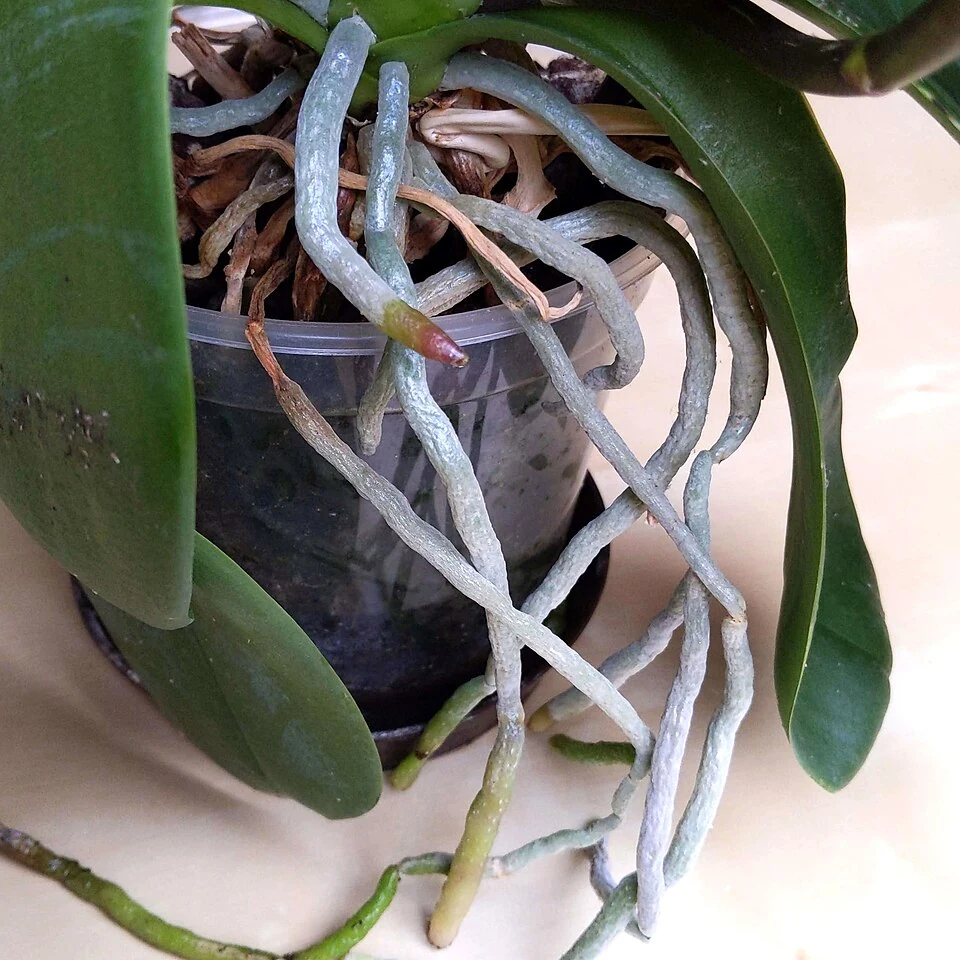
- Roots: Are roots firm, or are some hollow and mushy? AOS notes that root color varies, so texture is more informative than a color label alone.
- Trend: Are new roots growing, or is the plant steadily declining?
You may need to remove the plant from the pot to understand why it is dehydrated. Handle living roots gently, and take photographs as you inspect. An uncertain photograph cannot establish the cause of rot.
Choose a proportionate next step
If the mix is decomposed or drainage is poor, fresh porous medium may be needed. AOS repotting guidance identifies broken-down mix and a pot that no longer fits as the principal reasons to repot. A larger pot is not automatically necessary when only the mix needs replacement. The Phalaenopsis culture sheet describes trimming soft, rotted roots during repotting while preserving healthy roots.
If you are unsure which roots are dead, seek hands-on advice before cutting extensively. Do not apply a fungicide simply because leaves are limp: different causes need different responses, and a product label and local rules matter.
Watch for rapid decline. If the crown or stem is soft, tissue collapses, or symptoms spread quickly, isolate the plant from others and get local horticultural help. This page cannot diagnose a disease from symptoms alone.
Prevent the same problem recurring
After inspection or repotting, track how quickly the mix approaches dryness and whether water passes through the pot. Adjust the check frequency when light, temperature or season changes. The watering guide and interactive check explain why no fixed interval works for every home.

Common questions
Are white or silver roots dead?
Not necessarily. AOS notes that roots can have many colors. Check firmness and whether the root is hollow rather than cutting by color alone.
Should I water immediately if leaves wrinkle?
Check the roots and mix first. A plant with damaged roots may have wet mix but inadequate water uptake.
Want to check your own plant? Use the watering check or record observations with the free checklist. The tool does not set a fixed watering schedule.
Sources and scope
These sources support the care principles above. Home conditions and hybrids vary; observations alone cannot identify a pathogen or promise a bloom date.