How Often to Water a Phalaenopsis Orchid
Replace a fixed weekly schedule with a reliable moisture check.
For home-grown Phalaenopsis orchids
Check whether to water, review flowering conditions or print observation dates. Free, source-based tools for potted moth orchids; no account, score or promised bloom date.
Flowers have fallen? · No new flowers? Start with the matching guide.
Just brought an orchid home? · Found white cottony material?
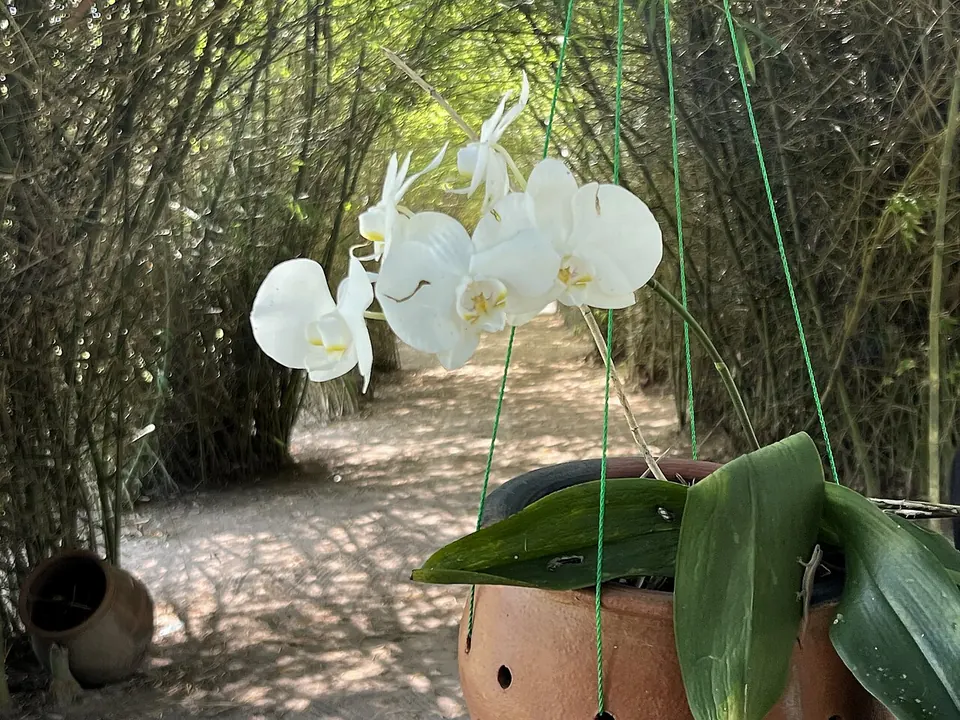
Real Phalaenopsis photograph. Image credit is listed in Sources.
Choose your question
Each guide is specific to Phalaenopsis, explains where its advice comes from, and shows what remains uncertain.
Replace a fixed weekly schedule with a reliable moisture check.
Decide what to do with a green or brown spike without guessing.
Separate plant health, light and seasonal cues into a practical check.
Check the plant, light and growing conditions before chasing a bloom date.
Know what to inspect when roots or leaves look wrong.
Inspect white material on a moth orchid, separate a suspect plant and confirm the insect before choosing a treatment. Includes a location checklist.
Check yellow-leaf location, speed, roots and recent exposure. Distinguish a single older leaf from spreading change before treatment.
Check whether the mix is wet or nearly dry, look at accessible roots, and choose a next step for wrinkled or limp moth orchid leaves.
Choose and observe an everyday indoor light position for a moth orchid. For changes after one strong-sun event, use the separate exposure guide.
Record one strong-sun event and subsequent moth orchid leaf changes. Use the separate light guide for everyday position management.
Record everyday day and night conditions beside a moth orchid. Distinguish routine growing conditions from accidental cold exposure.
Record accidental cold exposure and later moth orchid changes. Separate event assessment from routine temperature or flowering-cue guidance.
ASPCA lists Phalaenopsis as non-toxic to cats and dogs. Check plant identity and separate plant chewing from potting material or product exposure.
Compare bark, sphagnum and blends by packing, internal moisture and drainage. Choose a manageable setup instead of a fixed schedule.
Read the exact fertilizer label, check roots and record feeding. Avoid interchangeable doses, salt buildup and bloom-booster promises.
Investigate unopened buds that shrivel or drop with a care timeline, roots and environmental observations before choosing treatment.
Bring a new Phalaenopsis home: check packaging, inner-pot drainage, placement and unknown care history before changing its routine.
Compare the attachment point, tip and later nodes of moth orchid growth. Leave an uncertain tip intact; this is not a photo identification test.
Observe a moth orchid plantlet on a flower stem, distinguish it from basal growth and prepare for advice before separating it.
Decide what to check when moth orchid roots grow outside the pot. Separate exposed-root condition from mix moisture and repotting needs.
Decide whether a moth orchid needs repotting from medium condition, retained-root fit and plant health. Steps and supplies have separate guides.
Follow a prepared moth orchid repotting task through six structural drawings and pause points. Use the separate guide for subsequent care.
Observe the same moth orchid after a completed repot: compare the actual medium, root work, drainage and dated changes before changing care.
Measure root fit, usable inner dimensions and cover-pot drainage before choosing a clear moth orchid pot. Seller examples are not product tests.
Compare orchid medium ingredients, particle grade, labeled volume and delivered cost. Use your growing setup, not a best-mix ranking.
Plan a moth orchid light setup by mounting space, electrical compatibility and leaf-area coverage. Manufacturer figures are not our orchid trials.
Compare fertilizer formulation, water requirements and measuring directions before buying. No universal dose or unverified application count.
Prepare only the supplies missing for a justified moth orchid repot. Compare existing items, exact kit contents and delivered cost.
Use the free printable checklist to capture your plant, pot, roots and recent care.