Phalaenopsis care
Orchid Spike or Root: What to Check
Reviewed against cited sources · October 4, 2026 · Editorial/source revision; AOS roots reference retained from October 1. Independent review pending. · Scope: home-grown Phalaenopsis
Use more than color: photograph where the growth starts, the whole plant and the tip. If a tiny growth remains ambiguous, leave it intact and record it as unidentified.
Evidence limits. For potted Phalaenopsis in draining bark or sphagnum setups; not water culture or semi-hydroponics. Independent horticultural and beginner review has not been completed.
The short answer
Use more than color: photograph where the growth starts, the whole plant and the tip. If a tiny growth remains ambiguous, leave it intact and record it as unidentified.
Compare structure before color
On small screens, scroll the table sideways to compare columns. Keyboard users can focus it and use the arrow keys.
| Observation | Root context | Flower-stem context |
|---|---|---|
| Development | An extending tip followed by an outer root layer (velamen). | A developing stem becomes easier to identify as nodes and branches appear. |
| Position | Roots can emerge from the stem and extend into or outside the pot. | Find the attachment point between leaves; do not classify a tip without plant context. |
| Color | Root-tip colors vary; green, pale or darker alone is insufficient. | Green is not proof of a spike; roots can also have green growing tips. |
| Uncertain growth | Do not trim it simply because it is outside the pot. | Do not apply spike-cutting instructions until the structure is identified. |
Real photographs: understand their limits
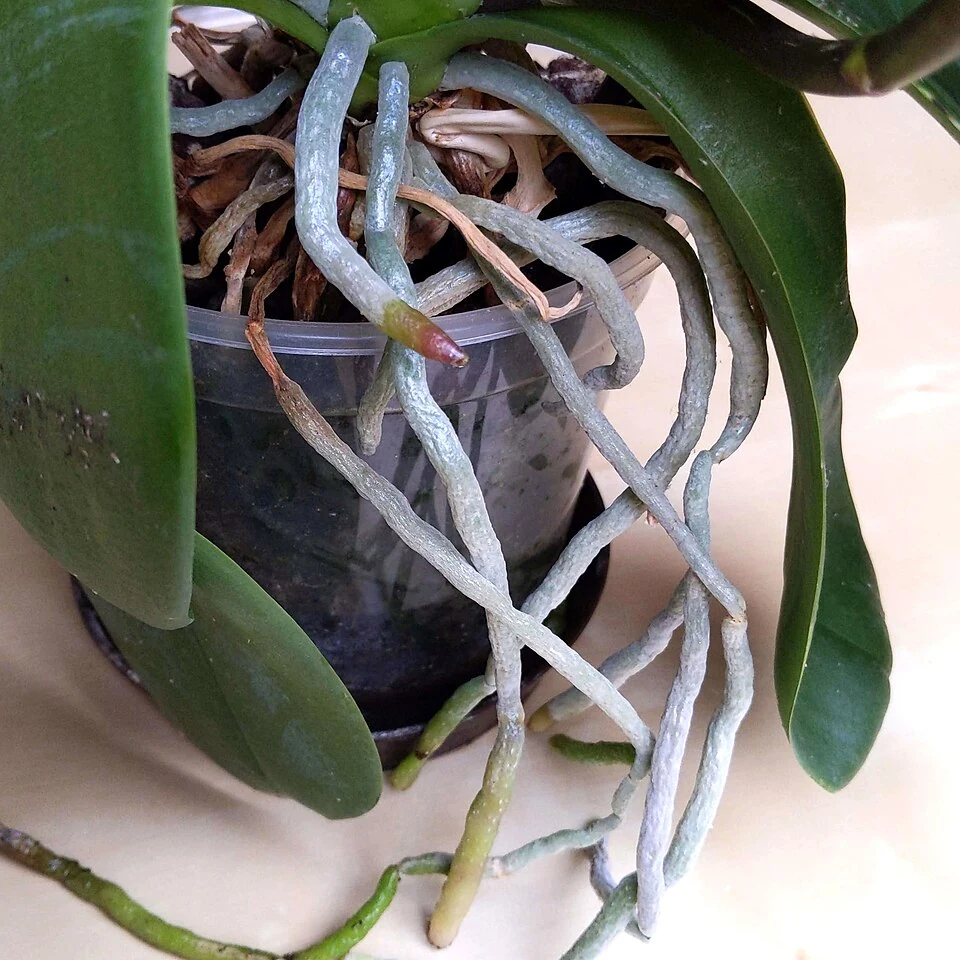
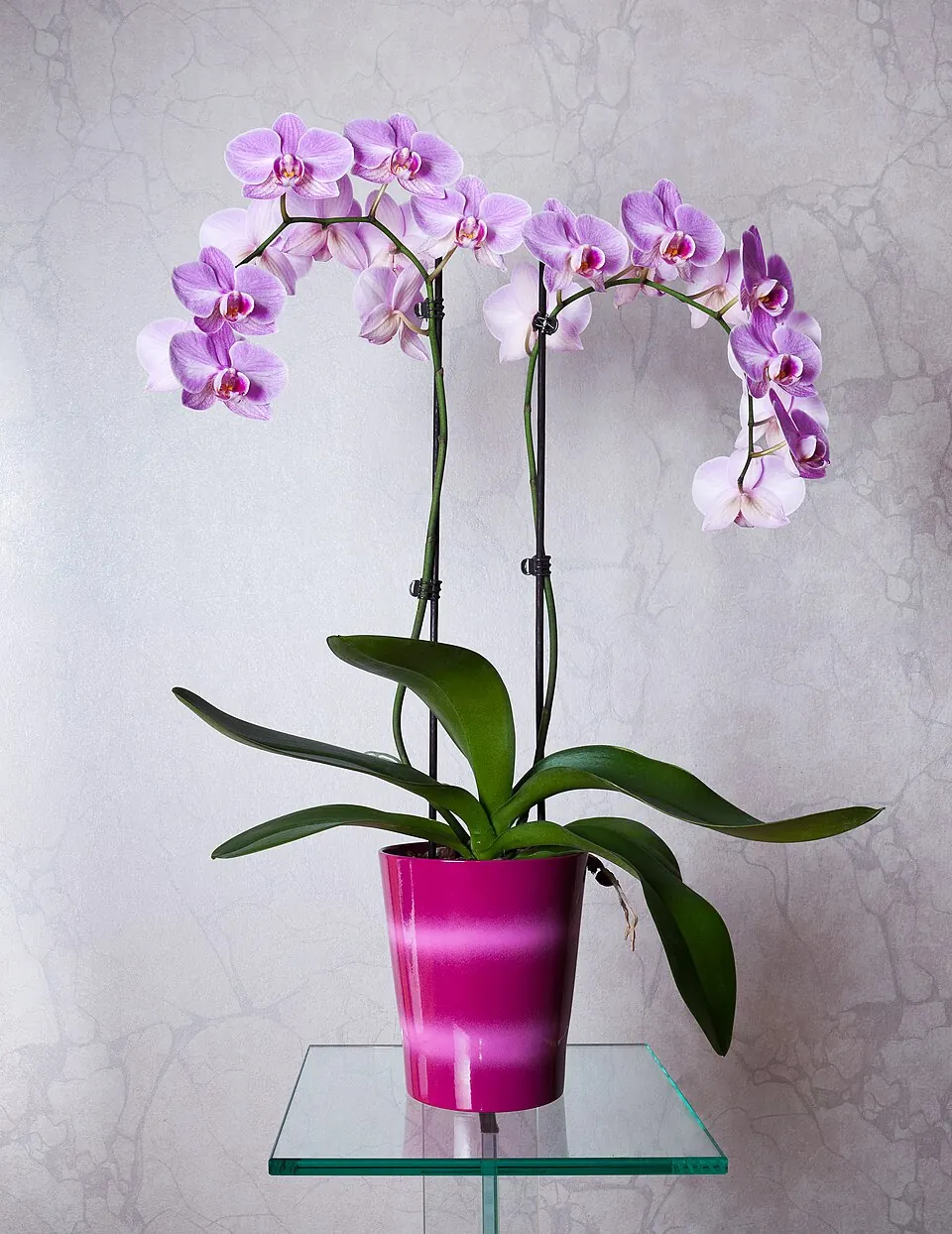
The root picture shows aerial roots; the flowering plant has developed flower stems. They are different specimens and stages, not a matched early-growth experiment. Use them to understand structure, not to classify every tiny nub.

Make a three-photo record
- Photograph the whole plant and pot; retain its species/hybrid label if known.
- Photograph the attachment point without bending growth or pulling leaves aside.
- Photograph the tip in focus with a nearby size reference that does not touch it.
- Date each set and repeat the same angles as development becomes visible. Keep the answer unknown when context is insufficient.
Choose the next action
A root does not need removal merely because it is aerial. A confirmed spike does not establish a fertilizer need or guarantee flowers. The RHS describes training developed flower stems as they grow; support without tightly pinching. Use after-flowering cutting guidance only for an identified flower stem.
Frequently asked questions
Is a green tip definitely a spike?
No. Roots can also have colored growing tips. Compare attachment and later structure, not green alone.
What if there are small leaves on the growth?
A plantlet with its own leaves is a different observation from a single root or stem tip. Do not detach it based on this page; seek plant-specific advice.
Is this an early-growth photo identification test?
No. A genuinely paired emerging-root/spike photo set and knowledgeable label review are still needed for that claim. The original diagrams explain structures and do not replace specimen evidence.
Want to check your own plant? Use the watering check or record observations with the free checklist. The tool does not set a fixed watering schedule.
Sources and scope
These sources support the care principles above. Home conditions and hybrids vary; observations alone cannot identify a pathogen or promise a bloom date.