Phalaenopsis care
Orchid Aerial Roots: Leave Them, Trim Them, or Repot?
Updated 2026-11-23 · For home-grown Phalaenopsis
For moth orchid roots already growing outside the pot, use their condition to decide whether to leave them alone or check the roots inside.
Scope and evidence
For potted Phalaenopsis in draining bark or sphagnum setups; not water culture or semi-hydroponics. Independent horticultural and beginner review has not been completed.
Start here
- Leave firm exposed roots attached; do not cut or bury them to tidy the plant.
- Check moisture inside the pot separately. An exposed silver root does not mean the pot needs water.
- Use the repotting criteria only if the mix is deteriorating or the retained roots no longer fit. For soft or collapsing tissue, use the root inspection path below.
What a normal aerial root can look like
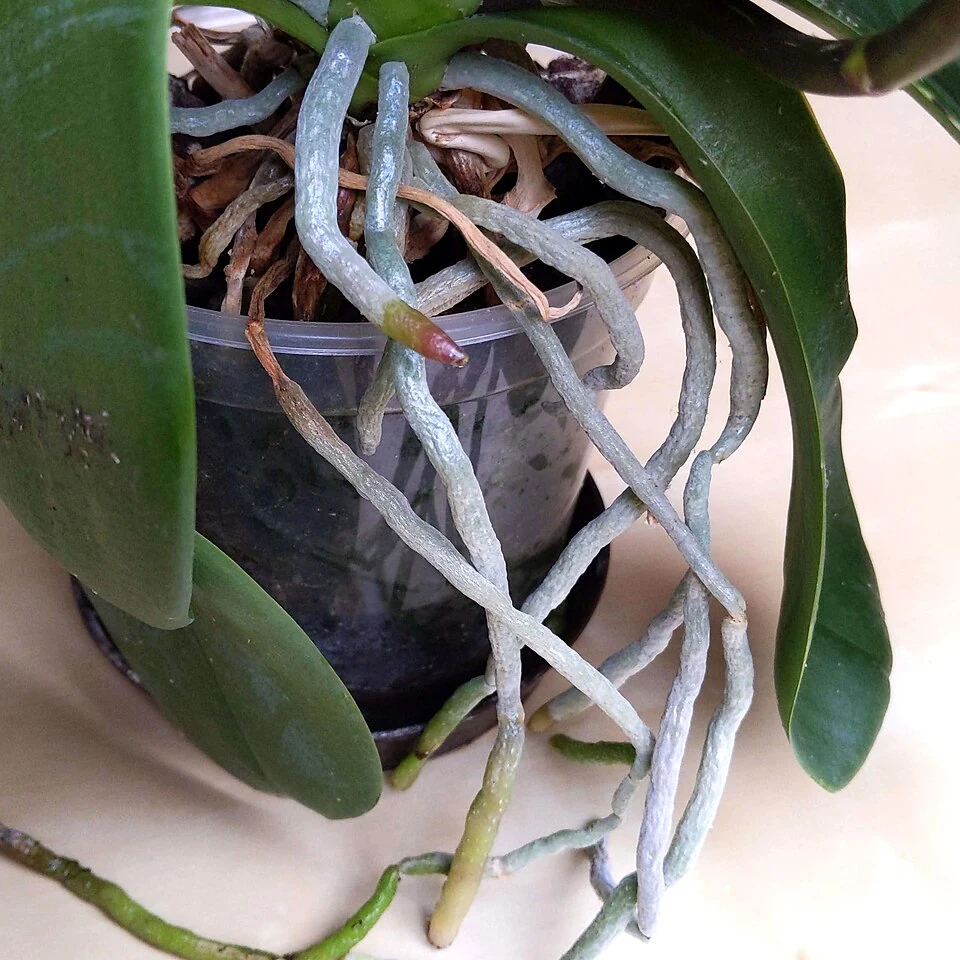
Moth orchids naturally grow roots into open air. A firm exposed root may look silvery when dry, and an actively growing tip may have a different color. Color alone tells you little about whether to cut. If you are unsure this is a root, check the growth structure first.

Decide what to do with the root you can see
| Observation | Next step |
|---|---|
| Firm root stretching over the pot rim | Leave it in place. Give it room to extend rather than bending or tying it back. |
| A single tip has stopped extending but the rest is firm | Keep it attached. Note where the change ends and compare the same area at the next check. |
| Soft, hollow or collapsing tissue, or several roots changing | Check whether the problem extends into the pot and whether the leaves or mix have changed. Use the root problem guide to decide when to seek help. Do not trim by color alone. |
| Roots outside the pot and old mix breaking down | Decide on repotting based on the mix and the plant. Do not force stiff exposed roots into the new pot. |
Do roots outside the pot mean I should repot?
No, not on their own. Firm aerial roots with intact mix and a stable plant can stay in place. If the mix is breaking down or the retained root system no longer fits without forcing it, use the repotting criteria. Do not bury or trim sound roots just to make the pot look tidy.
Decide watering from inside the pot
An exposed root dries in different conditions from a root inside the mix. A silvery root above the rim is not a signal to water a still-moist pot. Check the mix and drainage before changing your routine.
Track one root without cutting it
| Field | What to record |
|---|---|
| Identity | Plant label and where this root joins the stem; keep an uncertain identity unknown. |
| Condition | Firm, soft, hollow or not safely assessed; color alone is not the condition. |
| Context | Mix moisture and drainage at this observation, separately from exposed-root color. |
| Change | Same view and date, including whether change stays local or spreads. Seek help for rapid decline. |
Sources and scope
These sources support the care principles above. Home conditions and hybrids vary; observations alone cannot identify a pathogen or promise a bloom date.
Source review: Existing AOS, RHS and Clemson references. Independent horticultural and beginner review pending. A page update date is not a new verification of every external source.